Showing posts with label Quality Specialist. Show all posts

Armand V. Feigenbaum

Armand V. Feigenbaum
(1922-)

Armand Vallin Feigenbaum (born 1922) is an American quality control expert and businessman. He devised the concept of Total Quality Control, later known as Total Quality Management (TQM).
Feigenbaum received a bachelor's degree from Union College, and his master's degree and Ph.D. from MIT. He was Director of Manufacturing Operations at General Electric (1958-1968), and is now President and CEO of General Systems Company of Pittsfield, Massachusetts, an engineering firm that designs and installs operational systems. Feigenbaum wrote several books and served as President of the American Society for Quality (1961-1963).

His contributions to the quality body of knowledge include:
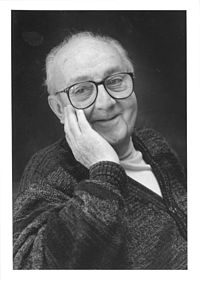
George Box (born in 18 October 1919)

George E. P. Box  (England)
George Box (was born in 18-10-1919) was the son of Harry Box and Helen Martin. He entered the University of London with the intention of taking a degree in chemistry. However, while he was in the middle of his course, World War II began and he was called to undertake war service.
As an expert in chemistry he was assigned to the British Army Engineers and given the task of determining the effects of poison gas which might be used as a chemical weapon. He carried out experiments on small animals but the results of the tests varied considerably and Box knew that it was not chemistry which would allow him to make recommendations based on his experimental data but rather a knowledge of statistics. He requested that a statistician be assigned to assist him interpret the data he had obtained but none was available. Box realised that he would have to learn sufficient statistics to carry out the task himself.

Walter A. Shewhart

Walter A. Shewhar
Walter A. Shewhart is responsible for making great strides in statistical quality control—and changing the manufacturing industry.
Walter Shewhart was a giant among giants in the quality movement during the first half of the 20th century. His mentoring of other engineers at Western Electric and his groundbreaking work with control charts arguably led a quality revolution and launched the quality profession.
Walter Andrew Shewhart was born to Anton and Esta Barney Shewhart on March 18, 1891, in New Canton, IL. Shewhart died on March 11, 1967, in Troy Hills, NJ. He attended the University of Illinois receiving bachelor’s and master’s degrees. In 1914, he married Edna Hart and moved to California where he earned his doctoral degree in physics while studying as a Whiting Fellow at the University of California, Berkeley, in 1917.
He had brief stints of teaching at University of Illinois, University of California at Berkeley, and La Crosse State Teachers College (renamed Wisconsin State University), but his academic career was short-lived.

Kaoru Ishikawa

Kaoru Ishikawa
(1915-1989)
Kaoru Ishikawa wanted to change the way people think about work. He urged managers to resist becoming content with merely improving a product's quality, insisting that quality improvement can always go one step further.
His notion of company-wide quality control called for continued customer service. This meant that a customer would continue receiving service even after receiving the product. This service would extend across the company itself in all levels of management, and even beyond the company to the everyday lives of those involved.
According to Ishikawa, quality improvement is a continuous process, and it can always be taken one step further.

W. Edwards Deming

Dr. Deming's Ideas Dr. Deming's famous 14 Points, originally presented in Out of the Crisis, serve as management guidelines. The points cultivate a fertile soil in which a more efficient workplace, higher profits, and increased productivity may grow.
1- Create and communicate to all employees a statement of the aims and purposes of the company.
2- Adapt to the new philosophy of the day; industries and economics are always changing.

    Philip Crosby

    Dr. Deming and Dr. Juran were the great brains of the quality revolution. Where Phil Crosby excelled was in finding a terminology for quality that mere mortals could understand.
    His books, "Quality Without Tears" and "Quality is Free" were easy to read, so people read them. He popularized the idea of the "cost of poor quality", that is, figuring out how much it really costs to do things badly.
    "Do It Right the First Time"Like Frederick Taylor, Philip Crosby's ideas came from his experience on an assembly line. He focused on zero defects, not unlike the focus of the modern Six Sigma Quality movement. Mr. Crosby was quick to point out, however, that zero defects is not something that originates on the assembly line. To create a manufacturing process that has zero defects management must set the tone and atmosphere for employees to follow. If management does not create a system by which zero defects are clearly the objective then employees are not to blame when things go astray and defects occur. The benefit for companies of such a system is a dramatic decrease in wasted resources and time spent producing goods that consumer's do not want.

    Joseph M. Juran


    Joseph M. Juran made many contributions to the field of quality management in his 70+ active working years.
    His book, the Quality Control Handbook, is a classic reference for quality engineers. He revolutionized the Japanese philosophy on quality management and in no small way worked to help shape their economy into the industrial leader it is today. Dr. Juran was the first to incorporate the human aspect of quality management which is referred to as Total Quality Management.
    The process of developing ideas was a gradual one for Dr. Juran. Top management involvement, the Pareto principle, the need for widespread training in quality, the definition of quality as fitness for use, the project-by-project approach to quality improvement--these are the ideas for which Juran is best known, and all emerged gradually.